Six Woodland Ingredients Craft Brewers Won't Put on the Label

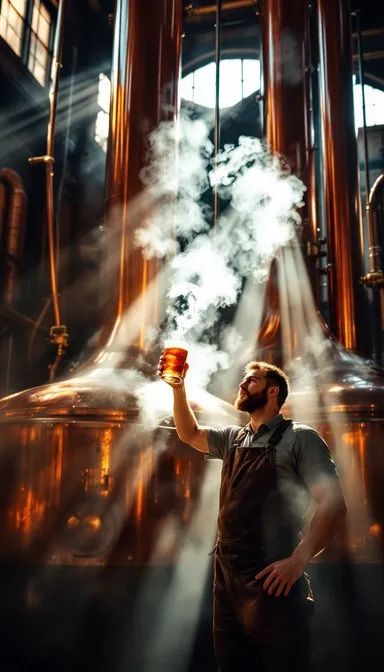
Photo: Davemoench, CC BY-SA 4.0, via Wikimedia Commons
Ask a brewer what's in their flagship IPA and they'll hand you a spec sheet. Ask what went into that one-off forest ale they poured at a festival last spring, and you'll get a smile and a vague answer about "some local botanicals."
There's a reason for the secrecy. Wild-sourced ingredients are inconsistent, hard to source, and impossible to copy — which makes them the closest thing craft beer has to a trade secret. But the secret's out, at least partially. Here are six woodland ingredients showing up in some of the most interesting small-batch beers in the country, what they bring to the glass, and how you could track them down yourself.
1. Spruce Tips
The flavor: Bright, resinous, citrusy — like a hop's wild cousin. Spruce tips taste less like pine needles and more like a cross between lemon zest and juniper.
Sourcing: Harvest in late spring when the tips are still lime-green and tender. They're abundant across the Pacific Northwest, New England, and Alaska. Never take from more than a few branches per tree.
Who's brewing with it: Alaskan Brewing Co. has made spruce a signature, nodding to the spruce ales sailors once brewed to avoid scurvy.
2. Chanterelle Mushrooms
The flavor: Apricot, earth, and something faintly peppery. In a malty amber or a barrel-aged brown, chanterelles add a savory depth that reads as "umami" without ever tasting mushroomy.
Sourcing: Look for them in mossy conifer forests late summer through fall, especially in Oregon, Washington, and the Carolinas. Bring an experienced forager or a very good field guide — false chanterelles exist.
Who's brewing with it: Several Pacific Northwest nano-breweries have dabbled in chanterelle saisons, usually as limited taproom-only releases.
3. Birch Sap
The flavor: Silky and faintly sweet, with notes of honey and wintergreen. It's tapped like maple sap but much more delicate — and it ferments beautifully.
Sourcing: Tap paper birch or yellow birch in early spring, during a short two-to-three-week window when temps swing above freezing by day. Birch sap spoils fast, so it needs to be used or fermented quickly.
Who's brewing with it: A handful of Alaska and Vermont producers have experimented with birch sap fermentables, sometimes blended into gruit-style ales.
4. Wild Mint
The flavor: More complex than the spearmint in your garden — sharper, greener, with a slightly bitter edge that keeps it from tasting like toothpaste.
Sourcing: Wild mint grows near streams and wetlands across most of the US. Snip the tops in midsummer, dry or use fresh, and go easy: it's potent.
Who's brewing with it: Small breweries in the Appalachian South have used wild mint in session ales and botanical witbiers.
5. Black Birch Bark
The flavor: Wintergreen, vanilla, and root beer — genuine sassafras-adjacent complexity. A little goes a very long way.
Sourcing: The key word is ethical. Only use bark from fallen or already-felled trees; stripping bark from a living birch can kill it. Many brewers get theirs from arborists and firewood cutters.
Who's brewing with it: Historic-style root beers and birch beers in the Northeast trace directly back to this ingredient, and a few craft producers keep the tradition alive.
6. Huckleberries
The flavor: Darker and tarter than blueberries, with a wild, wine-like edge. In a sour ale or a barrel-aged stout, they're transformative.
Sourcing: Huckleberries resist cultivation, which is exactly why they're special. Montana, Idaho, and the Pacific Northwest mountains are prime territory in late summer — and be prepared to compete with the bears.
Who's brewing with it: Idaho and Montana breweries have built entire seasonal releases around huckleberry sours and fruit beers.
The Point Isn't the Recipe — It's the Place
What all six of these ingredients have in common is a sense of origin. You can buy Cascade hops from any supplier in the world. You cannot buy your forest's spruce tips. That locality — that specific patch of woods, that particular spring — is what makes wild-ingredient beers taste like nowhere else.
If you're a homebrewer tempted to try one, start small, forage responsibly, and always positively identify anything before it goes in your kettle. The forest is generous, but it doesn't do refunds.