Same Recipe, Wildly Different Beer: The Chaotic Science Behind Barrel Aging
Imagine you and a friend follow the exact same chocolate chip cookie recipe — same flour, same butter, same oven temperature. Now imagine your cookies come out chewy and caramel-rich while your friend's are crisp and almost nutty. You'd want answers. Brewers who work with barrels live inside that mystery every single day, except the stakes are higher, the timeline stretches to years, and the variables are almost comically impossible to control.
Barrel-aged beer is the craft world's ultimate gamble. And the more you dig into the science — and the chaos — behind it, the more you start to appreciate why no two batches ever come out the same, even when everything on paper looks identical.
The Barrel Isn't Just a Container
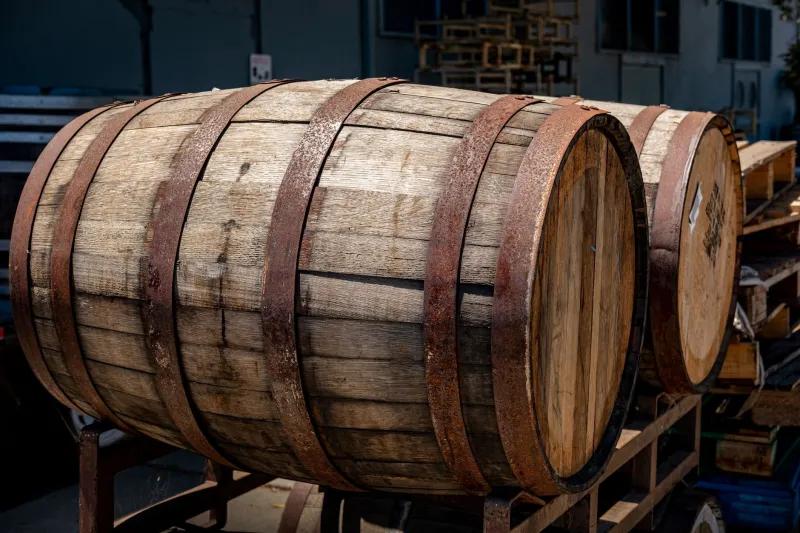
Let's start with the wood itself, because this is where a lot of people get tripped up. When brewers talk about using "the same barrels," they're usually referring to barrels of the same type — say, 53-gallon ex-bourbon American white oak from the same cooperage. But those barrels are not the same. Not even close.
Wood grain tightness varies enormously from tree to tree, and even from one section of a log to another. Tight-grained wood means slower oxygen transmission into the beer. Wider grain means faster. That difference alone can shift a stout's final flavor from silky and restrained to aggressively tannic and drying — even if both barrels sat in the same warehouse for the same amount of time.
Then there's the char level. Most cooperages offer a spectrum from light toast to a heavy char, but even barrels labeled identically can vary in how evenly that char was applied. A barrel with inconsistent charring will contribute vanilla and caramel compounds differently across its interior surface, meaning the beer that soaks into the head of the barrel may taste noticeably different from what settles near the bung.
Head brewers at established craft operations have started treating barrel selection less like procurement and more like tasting. Some are cracking open incoming barrels and nosing them before committing a batch to wood — looking for off-notes, checking for residual bourbon character, even running small test fills before committing a full batch.
Location, Location, Location
Here's something that doesn't get enough attention: where a barrel sits in a warehouse matters enormously. We're not talking feet — sometimes we're talking inches.
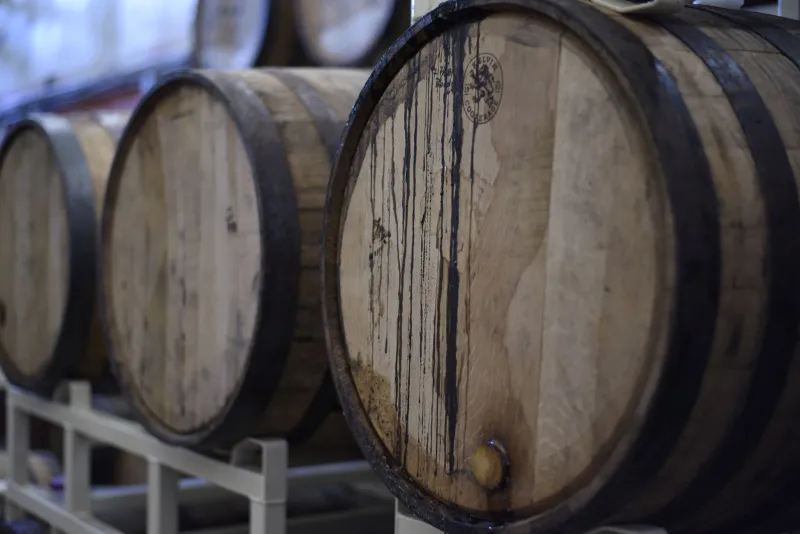
Barrels stacked near the ceiling of a rickhouse or aging facility experience significantly higher ambient temperatures than those resting on the ground floor. Heat drives extraction. A barrel sitting in a warm upper rack pulls compounds from the wood faster and more aggressively than one resting in the cooler lower rows. The beer in the upper barrel may reach peak complexity in 10 months. The one below it might need 18.
Seasonal temperature swings add another layer. Craft breweries across the Midwest, Pacific Northwest, and Appalachian regions deal with dramatic temperature fluctuations between summer and winter. As temperatures rise, liquid expands and pushes deeper into the wood. As they fall, it contracts and pulls back — bringing extracted compounds with it. This breathing cycle is part of what makes barrel-aged beer so complex. It's also part of what makes replication essentially impossible.
Some breweries have started mapping their warehouses the way vintners map their vineyards — identifying microclimatic zones and routing specific styles into specific locations intentionally. A barrel in the hot upper southwest corner might be perfect for an imperial stout that needs aggressive oak. A cooler ground-level spot might be ideal for a more delicate barleywine that would turn harsh under heat stress.
Neighbor Effects and the Invisible Microbiology
This one tends to surprise people outside the industry: the barrels sitting next to yours can influence what's happening inside yours.
In facilities that also age wild or mixed-fermentation beers — sours, farmhouse ales, anything with Brettanomyces or Lactobacillus — ambient microbes don't stay put. They drift. They colonize surfaces. A standard stout barrel aging 18 inches away from a barrel of actively fermenting lambic-style ale may pick up trace organisms that alter its character in subtle but real ways. Some brewers chase this effect deliberately. Others consider it a contaminant risk and design their cellars accordingly.
Even in facilities without wild beer programs, the wooden infrastructure itself — the walls, the floors, the pallets — can harbor microbial communities that influence barrel contents over time. Older warehouses with decades of brewing history baked into their beams are particularly notorious for this. It's part of why certain breweries develop a house character that persists across completely different recipes and styles.
Learning to Love the Chaos
So what do brewers actually do with all this unpredictability? The honest answer: the best ones stop fighting it and start working with it.
Blind tasting comparisons of identical recipes aged in different barrel positions have become a standard practice at many serious craft operations. Brewers pull samples from across their warehouse, taste them without knowing which barrel is which, and start identifying patterns. Which positions consistently produce more vanilla-forward results? Which tend toward dried fruit and spice? Over time, this kind of systematic tasting builds institutional knowledge that no recipe can capture.
Blending is the other major tool. Rather than trying to produce a single, consistent barrel that hits every target note, many breweries intentionally age across multiple positions and blend the results at the end. The high-heat barrel brings intensity. The cool-floor barrel brings subtlety. Together, they might hit a complexity that neither could achieve alone.
This is where barrel aging stops being a science and starts being something closer to an art form — or maybe just a very sophisticated conversation with chaos. The brewer isn't fully in control, and the best ones will tell you that's exactly the point.
What This Means for You as a Drinker
Next time you crack open a barrel-aged release and notice it tastes a little different from last year's batch, that's not a quality control failure. That's the brewery being honest with you about what barrel aging actually is.
The bottle you're holding is the product of a specific tree, a specific warehouse position, a specific season, a specific set of neighbors, and a thousand micro-decisions made by a brewer who was working with variables they couldn't fully predict. That's not a flaw in the process. That's the whole point of the process.
At Deep Dark Wood, we think that's worth celebrating. The forest doesn't produce identical trees. Neither should a great barrel program produce identical beers. Embrace the variation. That's where the flavor lives.