Dirt, Elevation, and the Bitter Truth: How American Hop Terroir Is Reshaping Craft Beer
Wine drinkers have talked about terroir for centuries. The idea that a grape grown on a sun-baked hillside in Sonoma tastes fundamentally different from one pulled off a vine in the Finger Lakes isn't controversial — it's practically gospel. But spend five minutes talking to the right hop farmer or a forward-thinking brewmaster, and you'll start to understand that hops have been quietly operating under the same rules all along. We just haven't been paying close enough attention.
At Deep Dark Wood Brewing, we spend a lot of time thinking about what the land gives us. And when it comes to hops, the land gives a lot — or it takes away, depending on where you're standing.
Why Terroir Matters in the Hop Yard
The term "terroir" gets borrowed from viticulture, but the concept is essentially just a fancy way of saying that place shapes flavor. For hops, the relevant variables include soil composition, drainage, elevation, average temperature swings between day and night, rainfall patterns, and even the specific microorganisms living in the ground. Change any one of those factors meaningfully, and you change the chemical profile of the cone that ends up in your kettle.
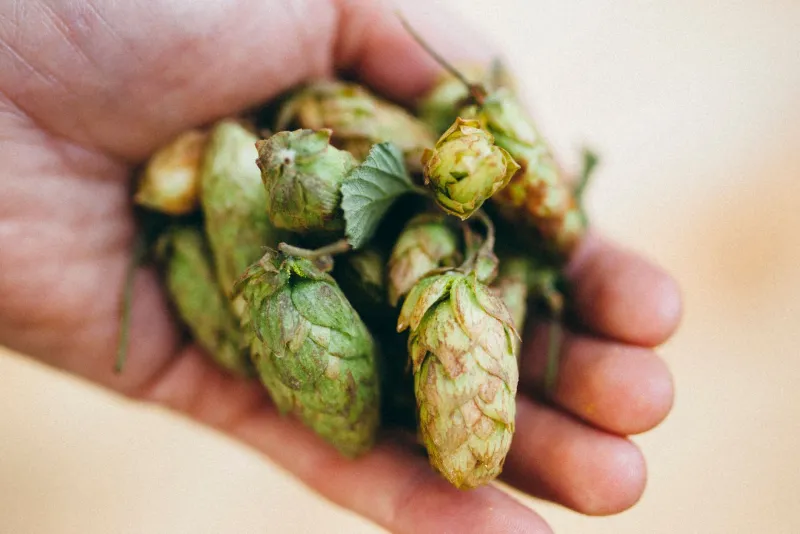
Hops produce their distinctive characteristics — bitterness, aroma, flavor — through alpha and beta acids, as well as a complex library of essential oils like myrcene, linalool, geraniol, and humulene. The ratios of those compounds aren't fixed. They shift based on growing conditions. A Cascade grown in the volcanic soils of Oregon's Willamette Valley doesn't taste the same as a Cascade grown in the sandy loam of upstate New York. Same variety, dramatically different personality.
That's not a defect. That's an opportunity.
The Pacific Northwest: America's Hop Heartland
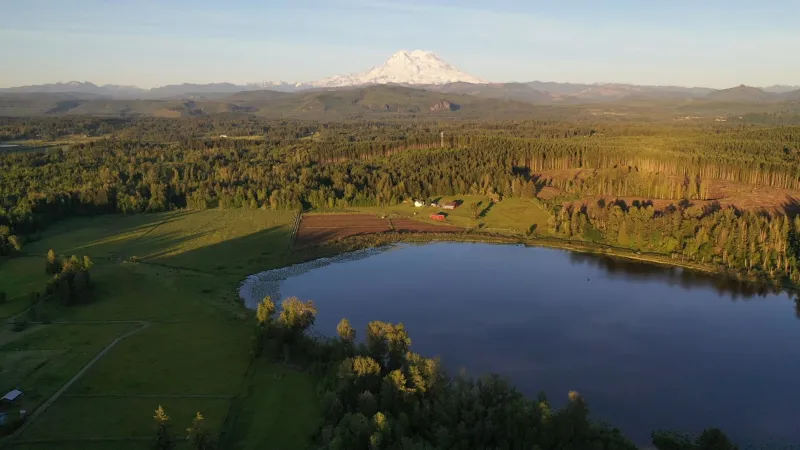
Let's start where most American hop conversations begin: the Pacific Northwest. Washington's Yakima Valley produces somewhere around 75 percent of the country's total hop supply, and there are good reasons for that dominance. The region sits at roughly 46 degrees north latitude — the same band where most of the world's great hop-growing regions cluster. Long summer days, dry heat during the growing season, cold nights, and rich volcanic soils that drain well but hold nutrients create near-ideal conditions.
Hops grown in Yakima tend toward bold resinous qualities — pine, dank earthiness, assertive bitterness that holds up in big IPAs. The combination of intense sun and cool nights concentrates alpha acids, which is partly why the valley became the backbone of American hop farming in the first place. Brewers who want reliable, punchy bitterness with classic West Coast character often anchor their recipes here.
But head west into Oregon's Coast Range foothills or south into the slightly cooler, wetter conditions of the Willamette Valley, and the same varieties start expressing softer, more floral and citrus-forward profiles. The reduced temperature extremes and higher moisture content change the essential oil balance, pulling more aromatic compounds to the surface. Brewers chasing a more delicate, layered aroma — the kind that makes you lean over the glass before you even take a sip — often source specifically from these pockets.
Mountain Elevation and What Cold Nights Do to a Hop Cone
Altitude introduces its own set of variables. Higher elevation typically means more intense UV exposure, cooler average temperatures, and sharper diurnal swings — those dramatic day-to-night temperature differences that stress the plant in productive ways.
Small experimental hop yards in Colorado, Idaho, and parts of Montana have been quietly pushing the boundaries of what American hops can express. Growers working at elevations above 4,000 feet report that their plants produce cones with unusually concentrated aromatic oils and sometimes unexpected flavor compounds — think stone fruit, lavender, or even a faint herbal quality that reads almost like fresh sage. The cold snaps the plant experiences at night essentially slow down the metabolism of certain compounds, allowing others to accumulate in ways that don't happen at lower elevations.
For craft brewers willing to experiment, these mountain-grown hops offer a genuine point of difference. You're not going to find that specific flavor profile in a bulk contract from a major supplier. It simply doesn't exist at scale.
The Northeast's Quiet Revolution
If the Pacific Northwest is the established powerhouse, the Northeast is the scrappy upstart rewriting expectations. New York, Vermont, Maine, and Michigan have seen a serious resurgence in regional hop farming over the past decade, driven largely by demand from local craft breweries wanting to brew with genuinely local ingredients.
Northeast-grown hops carry their own terroir signature. The humid summers, heavier clay-based soils in many areas, and shorter growing seasons produce hops that tend toward earthier, spicier, sometimes almost tea-like flavor notes. They're less brash than their Yakima counterparts — more understated, more nuanced. Brewers working with Northeast hops often describe them as requiring a different kind of recipe thinking. You're not building a beer around them so much as building a beer with them.
Some New York hop farmers have reported that their Chinook and Centennial crops express notable black pepper and dried herb characteristics that rarely show up in the same varieties grown further west. It's the same genetic material responding to a completely different environment, producing something genuinely distinct.
What Craft Breweries Can Do That Big Players Can't
Here's where the terroir conversation gets interesting from a brewing perspective. Large-scale commercial breweries need consistency above almost everything else. Their customers expect the same beer every single time, which means sourcing is about standardization — blending hops from multiple regions and harvests to hit a predictable target. Terroir is, in that context, a problem to be solved rather than a feature to be celebrated.
Craft breweries operate under different rules. A small-batch operation can source a single-origin hop lot from a specific farm in a specific valley and build an entire seasonal release around what that lot expresses in a given year. If the harvest came in with more citrus than expected, you lean into that. If the bitterness is softer, you adjust your recipe to let the aroma carry the beer. That kind of responsiveness — that conversation between brewer and ingredient — is genuinely impossible at industrial scale.
Some brewmasters who work closely with independent hop farmers describe the relationship in almost agricultural terms. They'll visit farms before harvest, taste the raw cones, and start mentally adjusting recipes before the hops even make it to the kiln. That's a fundamentally different way of brewing — slower, more attentive, more connected to what the land is actually producing.
Tasting the Difference
The best way to understand hop terroir isn't to read about it — it's to taste it side by side. If you can find two IPAs brewed with the same base hop variety but sourced from different regions, crack them open together and pay attention. The bitterness quality might read as sharp and resinous in one glass and round and citrusy in the other. The aroma might shift from pine and dankness to tropical fruit or fresh florals.
That difference isn't random variation or inconsistency. It's geography expressing itself through chemistry, landing in your glass as flavor.
At Deep Dark Wood Brewing, that's the kind of complexity we find endlessly fascinating — the idea that the forest floor, the mountain air, and the mineral content of soil somewhere in a hop yard hundreds of miles away can shape what you taste in a single sip. It's a long chain of cause and effect, and every link in it matters.
Pay attention to where your hops come from. The dirt has a lot to say.