Mash, Modify, Marvel: How Craft Brewers Are Weaponizing Enzymes to Unlock Flavors Nobody's Tasted Before
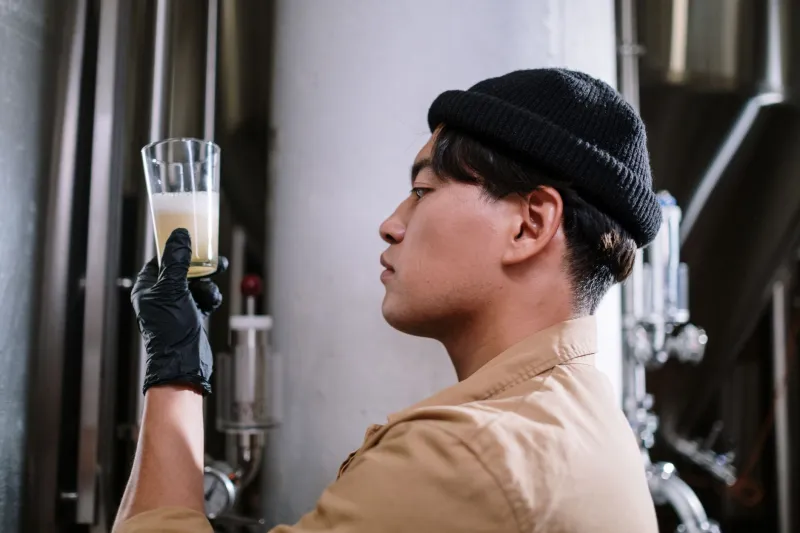
There's a moment in every great brew day where the grain and hot water meet, and something almost magical starts happening inside the mash tun. Starches begin breaking down. Sugars emerge. The whole biological machinery of fermentation gets primed and ready. Most brewers understand this process in broad strokes. But a growing number of small-batch innovators are going several layers deeper — manipulating the precise enzymatic activity happening at the molecular level to build flavor profiles that traditional brewing simply can't reach.
This is the enzyme revolution. It's quiet, it's technical, and it's reshaping what craft beer can be.
What Are Enzymes Actually Doing in Your Beer?
At its core, brewing is a biochemical process. When malted barley gets mashed in hot water, naturally occurring enzymes — primarily amylases, proteases, and glucanases — go to work breaking down complex grain molecules into simpler, fermentable forms. Alpha-amylase chops long starch chains into shorter dextrins. Beta-amylase snips those dextrins further into maltose, the sugar yeast loves most. Proteases break down proteins that would otherwise cloud the beer or create undesirable mouthfeel.
For most of brewing history, brewers worked with whatever enzyme activity their malt naturally provided, nudging the process by adjusting mash temperature, pH, and water chemistry. That's still standard practice at the vast majority of breweries. But a new generation of craft brewers is asking a different question: what happens if we add enzymes that barley doesn't naturally produce in brewing quantities — or enzymes sourced from entirely different organisms altogether?
The answer, it turns out, is something pretty extraordinary.
The Exogenous Enzyme Toolkit
Exogenous enzymes — meaning enzymes added externally rather than derived from the malt itself — have existed in industrial brewing for decades. Large-scale adjunct lager producers have long used them to drive down costs and speed up production. But craft brewers are now picking up these same tools for completely different reasons: not efficiency, but flavor.
Amyloglucosidase, for instance, is an enzyme that can break down dextrins that beta-amylase leaves behind, producing a nearly fully fermentable wort. The result? Beers with bone-dry finishes and remarkable crispness, even when brewed with high-gravity grain bills that would normally produce a thick, sweet beer. Some breweries are using this to build West Coast IPAs with a razor-sharp dryness that feels almost aggressive in the best possible way.
Then there's amylase sourced from fungal organisms — particularly Aspergillus species — which behaves differently than its barley-derived counterparts and can operate effectively at lower mash temperatures, giving brewers more flexibility in building flavor. Breweries experimenting with these strains report subtle shifts in the residual sugar profile that translate into rounder, more complex mid-palate experiences.
Protease additions are another frontier. Adding exogenous proteases during mashing can dramatically alter the protein structure of the finished beer, improving head retention, changing mouthfeel, and even unlocking flavor-active amino acids that wouldn't otherwise be present in meaningful quantities. Some brewers describe a kind of savory depth — almost umami-adjacent — that emerges from careful protease manipulation.
Unlocking the Cereal Grain Cabinet
One of the most exciting applications of enzyme science involves brewing with grains that are notoriously difficult to work with: raw wheat, oats, rye, corn, and even more exotic options like teff, amaranth, and buckwheat. These grains are often gelatinous, sticky, and enzyme-poor, making them nightmares in a traditional mash.
Enzyme additions change the math entirely. By supplementing with the right combination of glucanases (which break down the gummy beta-glucans in oats and rye) and amylases, brewers can work with grain bills that would have been practically impossible a decade ago. The payoff is beers with textures and flavor compounds that simply don't exist in barley-dominant brewing — a creamy, almost silky body from high oat percentages, or the distinctive earthy-spicy complexity that rye brings when it's properly converted.
Some small breweries are quietly building entire series around these grain-forward experiments, using enzyme science as the key that unlocks the pantry.
Fermentation-Side Enzyme Play
The mash isn't the only place this experimentation is happening. A handful of boundary-pushing brewers are introducing enzymes during or after primary fermentation — a practice that opens up a whole different set of possibilities.
Laccase enzymes, originally studied for their role in wood degradation (fitting, given how much we think about forest chemistry here at Deep Dark Wood), are being explored for their ability to oxidize phenolic compounds. In practice, this can reduce certain harsh, astringent qualities while simultaneously generating new aromatic molecules. The practical application is still emerging, but early results suggest laccase additions could help brewers dial in the balance of barrel-aged and wild-fermented beers with more precision than they've ever had.
Amyloglucosidase added post-fermentation is another technique gaining traction, particularly among brewers producing low-calorie or fully attenuated styles where residual sweetness needs to be minimized without sacrificing body or aroma.
The Flavor Compounds Nobody Expected
Here's where things get genuinely fascinating. Enzymatic activity doesn't just change fermentability or mouthfeel — it creates and modifies flavor-active compounds in ways that are still being mapped and understood.
Certain protease activity liberates ferulic acid from grain cell walls. Ferulic acid is a precursor to 4-vinylguaiacol, the clove-like phenolic compound that defines hefeweizens and certain Belgian ales. By manipulating protease activity — and combining it with a ferulic acid rest in the mash — brewers can amplify or suppress this character with a level of control that wasn't previously achievable.
Similarly, lipoxygenase enzymes (naturally present in malt but manageable through technique) are responsible for generating trans-2-nonenal, the papery, cardboard off-flavor associated with oxidized beer. Some breweries are now actively working to minimize lipoxygenase activity through mash temperature control and targeted enzyme additions, producing beers with dramatically extended shelf stability and fresher hop character weeks after packaging.
The inverse is also true: some brewers are deliberately coaxing specific enzymatic pathways to generate flavor compounds that add complexity. The line between off-flavor and intentional character is, as always in craft brewing, a matter of control and intention.
Science in Service of Soul
It would be easy to hear all of this and conclude that enzyme-forward brewing is somehow sterile or clinical — a lab exercise dressed up as artisanal craft. But spend any time talking to the brewers doing this work and you'll hear the opposite story.
For them, understanding the biochemistry isn't about replacing intuition. It's about expanding what intuition can reach. When you know exactly what your enzymes are doing, you can make deliberate choices about grain selection, mash design, and fermentation strategy that add up to beers with a coherence and intentionality that's hard to achieve otherwise.
Small-batch brewing has always been about pushing past convention. The enzyme revolution is just the latest — and maybe the most technically sophisticated — expression of that impulse. The forest floor is full of biological machinery working in ways we're only beginning to understand. The best brewers, it turns out, are paying very close attention.
And the beers coming out of those experiments? Worth every sip of the science.