Friend, Foe, or Force of Nature? The Great Brett Debate Splitting Craft Breweries Down the Middle
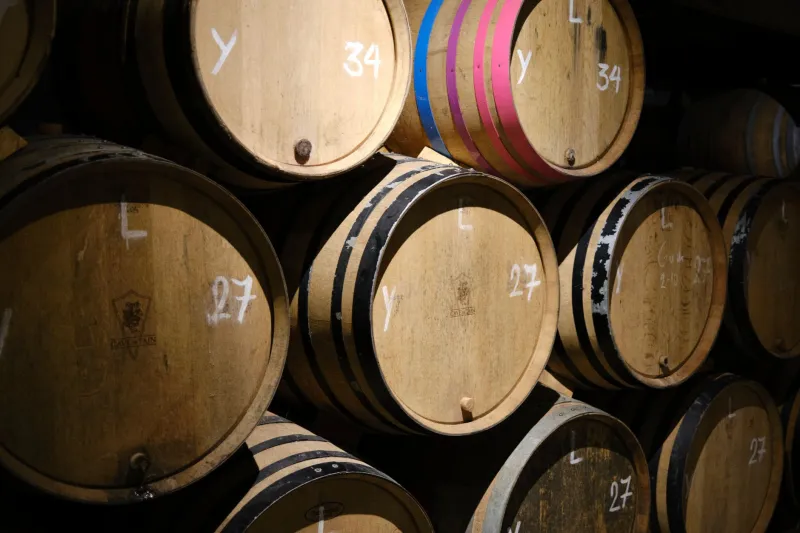
There's a moment every brewer dreads — and a smaller, increasingly vocal group quietly celebrates. You pull a sample from a barrel that's been aging for six months, hold it up to the light, take a sniff, and catch something unexpected. Something leathery. A little barnyard-y. Maybe a faint whiff of tropical fruit underneath all that funk. Your nose already knows before your brain catches up.
That's Brett. Short for Brettanomyces — a wild yeast genus that's been crashing the party in fermentation vessels for centuries. In the wine world, it's almost universally treated as a contaminant. In craft beer, though? The verdict is a whole lot messier.
What Exactly Is Brettanomyces?
At its core, Brettanomyces (and its sporulating form, Dekkera) is a genus of wild yeast found naturally in the environment — on fruit skins, in wood grain, floating around in the air of old cellars. Unlike Saccharomyces cerevisiae, the workhorse yeast behind most conventional beers, Brett is a slow, stubborn fermenter with a wildly different metabolic toolkit.
Here's where it gets scientifically interesting. Brett produces a class of compounds called 4-ethylphenol (4-EP) and 4-ethylguaiacol (4-EG) — the molecules responsible for those polarizing barnyard, leather, and smoky notes that Brett-forward beers are famous for. It also generates isovaleric acid (think: old cheese, sweaty socks at high concentrations) and a range of esters that can read as pineapple, mango, or stone fruit depending on fermentation temperature and substrate.
In other words, Brett doesn't produce one flavor. It produces a whole spectrum depending on conditions — which is exactly why some brewers love it and others have nightmares about it.
The Case for Embracing the Funk
For a growing segment of American craft brewers, Brett isn't a problem to solve — it's a house character to cultivate. Mixed-fermentation programs at breweries across the country, particularly in the Pacific Northwest, Northeast, and mid-Atlantic, have built entire reputations around controlled Brett fermentation.
The approach usually involves intentionally pitching known Brett strains — B. bruxellensis, B. anomalus, B. claussenii — into wort or secondary fermentation alongside or after Saccharomyces. Different strains have meaningfully different flavor profiles. B. claussenii, for instance, tends to run fruitier and more approachable. B. bruxellensis skews toward the earthier, more aggressive end of the spectrum.
Brewmaster Thea Kowalski, who runs the barrel program at a small farmhouse-style operation in Vermont, describes her relationship with Brett as "a collaboration, not a competition." She's been working with a house Brett culture for four years, carefully selecting for flavor characteristics through successive generations. "The first year, it was all over the place," she told us. "By year three, our Brett saisons had a consistency that our clean beers don't even have. It became our signature."
That's not a fluke — it's fermentation science. Research published in food microbiology journals over the past decade has shown that Brett populations, when properly managed, can stabilize into predictable flavor profiles over time. Temperature control, oxygen exposure, and the residual sugar content of the base beer all function as levers that experienced brewers can pull to guide the outcome.
The Case Against: When Brett Becomes a Nightmare
Not everyone has Thea's story, though. For every brewer who's turned a Brett infection into a signature release, there's another who's lost thousands of dollars worth of product to an uncontrolled outbreak.
The fundamental challenge is that Brett is extraordinarily difficult to eradicate once it's established in a barrel room. The yeast can survive in the porous grain of wood, in scratches on plastic equipment, in gaskets, in drains. Standard sanitation protocols that work fine against most microorganisms barely faze a well-established Brett colony.
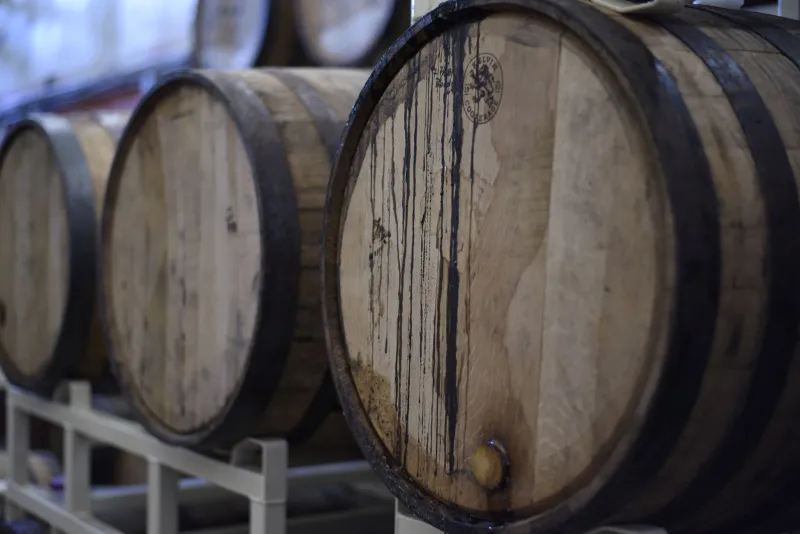
Jordan Mack, head brewer at a production lager-focused brewery in the Chicago suburbs, had a Brett contamination three years ago that he describes as "the most expensive lesson I've ever learned." A single infected oak barrel — purchased secondhand without adequate disclosure — seeded his entire barrel room. "We lost six barrels of a bourbon barrel stout we'd been aging for eight months. Six barrels. Gone. You can't sell that product to our customers — they're not looking for barnyard in their imperial stout."
For breweries producing predominantly clean styles — lagers, West Coast IPAs, American stouts — Brett contamination isn't a happy accident. It's a quality failure with real commercial consequences.
The Science of Controlled vs. Uncontrolled Brett
The distinction the industry keeps circling back to is intentionality. The scientific literature is increasingly clear that Brett's flavor impact is highly context-dependent, and that controlled inoculation produces very different results than environmental contamination.
A key variable is timing. Brett introduced early in fermentation, when residual sugars are still plentiful, tends to produce more ester-forward, fruity profiles. Brett that colonizes a finished beer — one with little remaining fermentable sugar — more often skews toward phenolic compounds like 4-EP, producing those harsher leather and barnyard notes that alarm drinkers unfamiliar with the style.
Oxygen management is another critical factor. Brett is a facultative anaerobe, meaning it can operate with or without oxygen, but its flavor output changes depending on which environment it's working in. Aerobic Brett fermentation tends to amplify acetic acid production — not always desirable. Tightly managed anaerobic conditions push it toward those more nuanced fruit and spice notes.
Temperature matters too. Warmer fermentation temperatures (above 70°F) accelerate Brett's activity but can also amplify off-flavors. Cooler aging, in the 55–65°F range typical of a good cellar, tends to produce slower, more complex Brett character — the kind that makes a Flanders red or a wild farmhouse ale worth waiting eighteen months for.
Where the Industry Is Heading
The craft beer world in 2024 is more Brett-literate than it's ever been, and that's changing how breweries approach the question. Mixed-fermentation styles — saisons, wild ales, Flanders reds, American wild ales — have carved out a genuine, loyal consumer base. Festivals dedicated to sour and wild ales consistently sell out. The audience exists.
At the same time, the breweries making those styles are increasingly rigorous about how they manage Brett, treating it less like a wild card and more like any other ingredient that requires precision and respect. Dedicated Brett barrel rooms, physically separated from clean production areas, are becoming standard practice at serious mixed-fermentation operations. Some breweries are even maintaining their own isolated Brett cultures with documented lineage, the way bakers maintain sourdough starters.
For breweries that don't want Brett anywhere near their product, the message from the science is equally clear: prevention is infinitely easier than remediation. Rigorous sourcing of used barrels, thorough sanitation protocols, and regular environmental testing for wild yeast can keep a clean barrel room clean.
The Bottom Line
Brett doesn't care what side of the debate you're on. It's been fermenting things long before craft beer existed and it'll be fermenting things long after the current tap handle trends have faded. The breweries that seem to do best with it — whether they're embracing it or excluding it — are the ones who've taken the time to genuinely understand what they're dealing with.
Funk or flaw. House character or contamination. It all depends on what you're making, who you're making it for, and whether you've got the science locked down tightly enough to tell the difference before it's too late.
Out here in the deep dark wood, we've got a lot of respect for microorganisms that refuse to be fully tamed. Brett included.