Beyond Yeast: The Wild World of Fungi Redefining What Craft Beer Can Taste Like
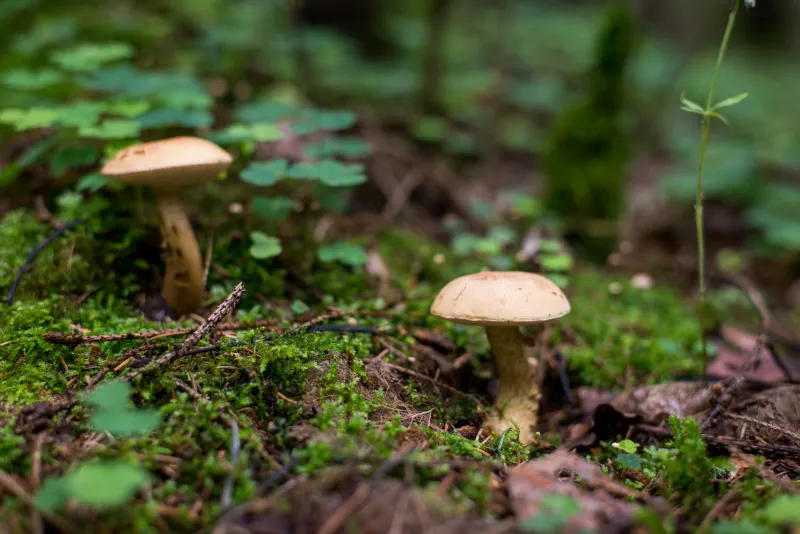
Walk through a dense forest after a good rain and you'll notice it immediately — that deep, earthy perfume hanging in the air. It's the smell of fungi doing their thing, breaking down wood, cycling nutrients, quietly running the whole show beneath your feet. Here at Deep Dark Wood Brewing, that forest floor has always been something of a muse. So when we started hearing about craft brewers who were bringing actual fungal science into the fermentation tank — beyond the usual Saccharomyces cerevisiae strains everyone already knows — we had to dig deeper.
What we found is one of the most genuinely exciting frontiers in American craft brewing right now.
Fungi 101: Why Yeast Is Just the Beginning
Most folks understand that yeast is a fungus. What fewer people realize is that the fungal kingdom contains an estimated 2.2 to 3.8 million species, and brewing has historically tapped into an almost comically tiny slice of that diversity. Traditional ale and lager yeasts, a handful of Brettanomyces strains for wild fermentation — that's roughly the equivalent of exploring one tree in an old-growth forest and calling it a day.
Fungi operate through enzymatic activity. They secrete enzymes that break down complex organic compounds — starches, proteins, cellulosic material — into simpler molecules that can be metabolized or that directly contribute to aroma and flavor. Yeast produces ethanol and CO2 as its primary outputs, but other fungal species produce wildly different enzymatic profiles, and that's exactly what brewers are starting to exploit.
The science here connects directly to fermentation manipulation: by introducing specific fungal organisms at precise stages of the brewing process, brewers can steer the biochemical environment of a beer in directions that conventional yeast simply cannot reach.
Koji: The Fungus That's Already Changing American Brewing
If there's a gateway fungus for craft brewers, it's Aspergillus oryzae, better known as koji. This mold has been central to Japanese fermentation culture for centuries — it's what turns soybeans into miso, rice into sake, and grain into the base for soy sauce. But in the last several years, American brewers have started bringing it into the brewhouse in a serious way.
Koji works by producing amylase and protease enzymes in abundance. When grown on barley or other brewing grains before the mash, it pre-digests starches and proteins in ways that open up entirely new flavor territories. Brewers report notes of umami richness, subtle sweetness, and a silky mouthfeel that's hard to achieve through conventional means. Some describe finished beers as having a "depth" that's difficult to articulate but immediately noticeable — like the difference between a photograph of a forest and actually standing in one.
Breweries across the country, particularly on the West Coast and in the Northeast, have been quietly running koji experiments for the better part of a decade. The results range from delicate rice lagers with unexpected complexity to bold, savory ales that challenge everything you thought you knew about beer flavor.
Medicinal Mushrooms as Brewing Ingredients
Beyond mold-based fermentation manipulation, a separate but related trend involves incorporating whole or extracted mushrooms directly into the brewing process. We're talking species like reishi (Ganoderma lucidum), lion's mane (Hericium erinaceus), chaga (Inonotus obliquus), and turkey tail (Trametes versicolor).
These aren't being added for fermentation purposes — they don't metabolize sugars the way yeast does. Instead, they contribute flavor compounds, polysaccharides, and bioactive molecules that interact with the beer's existing chemistry in interesting ways. Reishi, for instance, carries a distinctive woody bitterness that can function almost like a botanical hop addition, lending herbal complexity without the citrus or pine notes that hops typically bring. Chaga, which grows on birch trees in northern climates, contributes a dark, slightly vanilla-adjacent earthiness that plays beautifully in stouts and porters.
Some breweries are steeping dried mushroom material during the whirlpool or conditioning phase. Others are creating mushroom tinctures and adding them post-fermentation. A few are experimenting with mushroom-forward grain bills, growing mycelium directly on malted barley before kilning. Each approach produces a different result, and the field is still young enough that there's no established playbook.
The Flavor Science Behind Fungal Compounds
So what exactly are these fungi contributing at a molecular level? It depends heavily on the species and the application, but a few categories of compounds keep coming up in the research.
Terpenoids are aromatic molecules found in many mushroom species, and they overlap significantly with compounds found in hops and certain yeast strains. Reishi is particularly rich in triterpenes, which contribute to its bitter, complex character. Beta-glucans, long-chain polysaccharides abundant in many edible and medicinal mushrooms, can affect mouthfeel and body in ways that brewers find useful for certain styles. Melanins and pigments from species like chaga can contribute color and antioxidant activity. And the enzymatic activity of certain molds, particularly in the Aspergillus family, directly reshapes the sugar and protein composition of the wort itself.
The interaction between these compounds and the existing beer chemistry — the acids, esters, and alcohols produced during fermentation — is where things get genuinely complex and genuinely interesting. Small changes in timing, temperature, and fungal strain can produce dramatically different outcomes. It's the kind of variable-rich environment that attracts a certain type of brewer: the ones who think of the fermentation tank less like a machine and more like an ecosystem.
What Brewmasters Are Actually Saying
Talk to brewers who are deep in this work and a few themes emerge consistently. First, patience. Fungal brewing experiments take time — koji cultivation alone requires careful temperature and humidity management over 40-plus hours before it ever touches a mash tun. Second, humility. The variables are numerous enough that even experienced brewers describe a lot of batches going sideways before something remarkable emerges. Third, genuine excitement.
The consensus among experimental brewers is that fungal ingredients represent one of the last genuinely uncharted territories in craft beer flavor development. Hops have been bred and catalogued exhaustively. Yeast strains have been isolated, characterized, and commercialized to a fine degree. But the broader fungal kingdom? That's still largely unexplored from a brewing perspective, and the potential flavor space it represents is enormous.
Where This Is All Heading
The fungi-forward brewing movement is still niche, but it's gaining traction fast. You're seeing it show up at regional craft beer festivals, in limited-release taproom offerings, and in the kinds of experimental series that serious beer enthusiasts seek out specifically because they want something they've never tasted before.
For us at Deep Dark Wood Brewing, this whole conversation feels like home. The forest has always been a place where fungi are quietly doing the most important work — decomposing, transforming, connecting. The idea that those same processes can be channeled into a glass of beer, producing flavors that are genuinely novel and rooted in something real and wild, is about as aligned with our ethos as it gets.
The deep dark wood has a lot left to teach us. We're just getting started listening.