From Forest to Fermentation: How the Wood You Choose Changes Everything in the Barrel
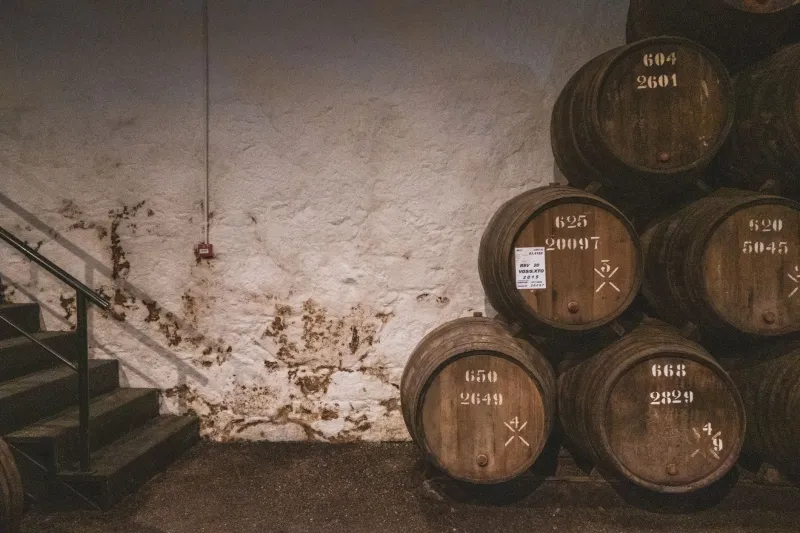
There's a moment every brewer knows well — the first pull from a barrel that's been quietly doing its thing in a dark corner of the brewery for six, eight, maybe fourteen months. You tip the thief, watch the liquid catch the light, and take that first sniff. Either something magical has happened in there, or something has gone sideways in a way that no amount of blending will fix.
Barrel aging is patient work. It rewards obsessive attention to detail and punishes shortcuts with a kind of slow, expensive cruelty. And at the heart of every barrel program — especially in the small-batch world where you can't afford to write off a 30-gallon experiment — is one foundational decision: the wood.
Why Wood Species Actually Matters
Most people's mental image of a beer barrel is a used bourbon cask, and honestly, American white oak (Quercus alba) has earned its reputation. The tight grain structure, the vanillin compounds, the coconut-forward lactones — it's a reliable canvas. But treating oak as the only option is like deciding every beer has to be a pale ale. You're leaving a whole forest of possibility on the table.
Different wood species carry genuinely distinct chemical profiles. The tannin structure varies. The porosity changes how aggressively the beer interacts with the stave. The aromatic compounds baked into the wood during the coopering process — which varies by toasting level — shift the flavor contribution dramatically. Once you start thinking about wood selection the way a blender thinks about grain bills, the whole barrel program opens up.
American White Oak remains the workhorse for good reason. High in vanillin and lactones, it delivers that familiar vanilla-caramel-coconut warmth. Heavily toasted staves push things toward dark chocolate and espresso territory. It's versatile, widely available, and the backbone of most American whiskey barrels — meaning the secondary-use barrel market is robust and accessible for small breweries working on a budget.
French Oak (Quercus petraea or Quercus robur) brings a tighter grain, which means a more measured extraction. The flavor profile skews toward dried fruit, subtle spice, and a silkier tannin structure. Wine-forward brewers — those aging saisons, sour ales, or Belgian-inspired strong ales — tend to gravitate here. The influence is more nuanced, which cuts both ways: you need a beer with enough backbone to carry it.
Maple is where things get genuinely interesting for brewers willing to experiment. Particularly popular in the Northeast, maple staves and spirals impart a mild sweetness and a faint syrupy quality without the aggressive tannin bite of some oaks. It pairs beautifully with darker, maltier styles — think imperial stouts, brown ales, or anything with a natural caramel base. The sugar maple's aromatic compounds interact with residual beer sugars in ways that feel almost collaborative.
Hickory is the wildcard. Assertive, smoky, and loaded with bold phenolic compounds, hickory is not subtle. A little goes a long way. Used thoughtfully — often in combination with a milder primary vessel — it can add a smoked-meat-meets-dark-fruit complexity that's genuinely unlike anything else. Used carelessly, it can overwhelm a beer in weeks. Brewers who work with hickory tend to treat it more like a seasoning than a vessel.
The Sourcing Question: New Staves vs. Used Barrels
For a small-batch operation, sourcing strategy shapes the entire program. Full barrels — typically 53 gallons for standard bourbon casks, though wine barrels often run 59-60 gallons — represent a significant volume commitment. For a 10-barrel brewhouse running experimental batches, that math gets complicated fast.
Used barrels from local distilleries have become a genuine community resource in the craft beverage world. A bourbon distillery that's done its two-year minimum in a charred white oak barrel has essentially handed you a pre-seasoned flavor delivery system. The residual spirit compounds — esters, aldehydes, trace alcohol — continue interacting with the beer long after the whiskey is gone. The key is establishing relationships early. Distilleries with active barrel programs often have waiting lists, and the good ones go fast.
For brewers working at smaller scales, wood alternatives — spirals, cubes, chips, and staves — offer precision that full barrels can't match. You control the surface area-to-volume ratio, the toasting level, the species, and the contact time with a granularity that a 53-gallon barrel simply doesn't allow. The tradeoff is a different kind of extraction: faster, sometimes harsher, missing the slow micro-oxygenation that makes long barrel aging so transformative.
Some small breweries run hybrid programs — aging in used barrels for the oxidative character and micro-oxygenation, then finishing with specific wood additions to dial in flavor specificity. It's labor-intensive, but the results can be remarkably precise.
Timing Is Everything (and Everyone Gets It Wrong at First)
Asking how long to age a beer in a barrel is a bit like asking how long to roast a chicken — the right answer depends on the size of the bird, the temperature of the oven, and what you're serving it with. Beer chemistry doesn't care about your release schedule.
Lighter beers — lower ABV, delicate malt profiles, hop-forward styles — extract wood character aggressively and can tip into over-oaked territory in a matter of weeks. Higher-gravity beers, particularly imperial stouts, barleywines, and strong ales above 10% ABV, have the structure to absorb extended aging. The alcohol itself acts as a solvent, drawing different compounds from the wood at different rates than water-forward fermentations.
Temperature matters more than most brewers admit upfront. Warmer conditions accelerate extraction and increase the rate of micro-oxygenation. Cooler environments slow everything down, often producing more integrated, complex results over longer timelines. Seasonally rotating barrels — or intentionally exposing them to temperature fluctuation — is a technique borrowed from wine and spirit aging that translates surprisingly well to the brewery.
The honest truth about timing is that it requires tasting. Frequently. Obsessively. Every barrel is different — different previous occupant, different char level, different age of the wood, different position in the barrel room. The brewers pulling award-winning barrel-aged releases aren't following a calendar. They're tasting on a schedule and making decisions based on what the beer is actually doing.
The Small-Batch Advantage
Here's the thing about running a small program: you can afford to be weird. A large production brewery committing to a barrel program needs volume, consistency, and predictability. A small-batch operation can take a 15-gallon run of something experimental, split it across two different wood types, and genuinely learn something — without betting the whole taproom on the outcome.
The craft beer drinkers who seek out barrel-aged releases aren't looking for the safest, most predictable version of a style. They're looking for something that couldn't have come from anywhere else — a beer shaped by a specific wood, a specific place, a specific season in a specific barrel room. That's a story only small-batch brewing can tell.
The forest has a lot to say. It just needs the right brewer to listen.