Barrel-Finished, Barrel-Touched, Barrel-Adjacent: The Weasel Words Hiding in Your Craft Beer Aisle
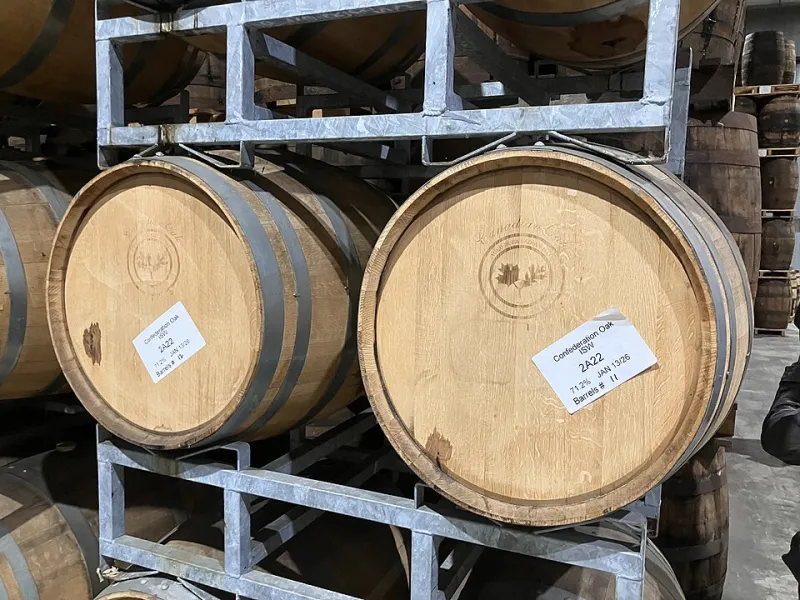
Photo: Gogerr, CC BY-SA 4.0, via Wikimedia Commons
Let's get one thing out of the way: this is a rant, but it's a rant with receipts.
Walk down the craft aisle of any decent bottle shop and read the labels. Barrel-aged imperial stout, sure. But also barrel-finished. Barrel-influenced. Barrel-rested. Barrel-kissed — we wish we were joking. Each phrase is doing the same job: borrowing the prestige of the barrel while quietly admitting the beer never really lived in one.
We think drinkers deserve better. Here's why.
What Barrel Aging Actually Is
Real barrel aging is a commitment. Beer sits in wood — usually a spirit or wine barrel — for months, sometimes years. During that time, three things happen: oxygen moves slowly through the staves, mellowing harsh edges; the wood itself contributes vanillin, tannins, and toast compounds; and any resident microbes or residual spirits in the barrel get a long time to work on the beer.
Time is the active ingredient. A stout aged twelve months in a bourbon barrel is a fundamentally different beer than the same stout that spent a weekend in one. The barrel isn't a spice rack you wave over the fermenter. It's an environment, and environments take time to change things.
So What Do the Euphemisms Mean?
Here's the uncomfortable truth: most of them legally mean almost nothing.
The federal Alcohol and Tobacco Tax and Trade Bureau (TTB) regulates what can appear on a label, but "barrel-aged" itself has no binding federal definition — no minimum duration, no minimum percentage of the beer's time in wood. In practice, the industry has treated it as meaning a meaningful maturation period, and most serious breweries wouldn't dream of slapping it on a beer that saw two weeks of oak.
That gray zone is where the weasel words breed. "Barrel-finished" typically means the beer was fully fermented elsewhere, then transferred to a barrel for a short stay — days or weeks — to pick up quick oak character. "Barrel-influenced" can mean anything, including beer aged on wood spirals or oak cubes with no barrel involved at all. We've seen "barrel-kissed" used for beers that got, at most, a brief encounter with freshly dumped oak.
None of these products is necessarily bad. Oak alternatives can make perfectly pleasant beer. The problem is the implication — that the consumer should hear "barrel-aged" and think of the eighteen-month sour, while the label's lawyer hears "technically not a claim."
The Brewers Weigh In
Among the small-batch brewers we spoke with, the divide is real.
"If it didn't sleep in the barrel, it didn't earn the word," one Midwest brewer told us flatly. His operation ages a barleywine for over a year, and he sees soft labeling as theft — of shelf credibility from breweries doing the actual work.
Others are more pragmatic. "Finishing is a legitimate technique," a Colorado brewer argued. "A few weeks in a gin barrel does something different and real. My issue isn't the technique, it's the font size. Say 'finished for three weeks' on the label, not buried in a six-point footnote."
That's the reasonable middle ground, and we suspect most drinkers would accept it: technique plus duration, stated plainly. "Barrel-finished: 21 days in rye whiskey barrels" is honest. "Barrel-influenced" alone is a shrug printed on cardboard.
Why Connoisseurs Should Care
You pay a premium for barrel-aged beer — often $15 to $30 a bottle — because time and wood are expensive. When ambiguous language lets short-cut products ride that same premium, everyone loses: the drinker overpays, and the brewery that actually waited gets undercut by one that didn't.
What transparency would look like isn't complicated:
- State the duration. Months in barrel is a badge; say it out loud.
- Name the barrel. Bourbon, rye, wine, gin — the previous occupant is half the flavor.
- Distinguish oak alternatives. Wood cubes and spirals are fine tools. Call them what they are.
The Bottom Line
Words drift. We get it. But "barrel-aged" sits at the center of a whole category of craft beer, and if the industry lets its edges dissolve into a fog of adjectives, the term stops meaning anything at all — and drinkers stop being able to tell a twelve-month masterpiece from a three-week marketing decision.
At a small-batch scale, patience is the whole business model. We'd like the language to reflect that. Until it does, read the fine print, ask the taproom staff how long the beer actually saw wood, and treat any label that can't answer clearly with the suspicion it has earned.