Twenty-Four Dark Nights: A Solstice Beer Calendar Built to Last
Photo: Archives New Zealand from New Zealand, CC BY-SA 2.0, via Wikimedia Commons
Most advent calendars are sugar and surprise. A dark-beer calendar is patience and discovery. Instead of opening a tiny door for a chocolate, you open a bottle you chose weeks ago, pour it slowly, and pay attention to how the beer changes as the season gets darker. The format is simple: 24 beers, 24 nights, one finish line at the winter solstice.
In 2026, the winter solstice falls on December 21. That gives you a natural 24-day window from November 28 through December 21. If you prefer the traditional December 1 through 24 run, that works too. The point is not to be strict about the calendar. The point is to build a ritual that makes you slow down.
Choose a spine, not a stunt
A good dark-beer calendar has a spine: a sequence of styles that moves from lighter and crisper to richer and heavier. You are not just collecting 24 dark bottles. You are designing a progression.
Start with black lagers, schwarzbiers, and dark Czech-style lagers. These are clean, roast-forward, and low enough in alcohol that they will not wear out your palate in the first week. Move into porters, including brown porter, robust porter, and smoked porter. Then bring in stouts: dry stout, milk stout, oatmeal stout, and maybe one coffee or chocolate stout. Save the big beers for the final stretch: imperial stout, barrel-aged stout, dubbel, quad, and any strong dark Belgian-style ale you have been saving.
A useful ratio for 24 bottles is roughly eight lagers and lighter porters, eight stouts and darker porters, and eight strong or barrel-aged beers. You can bend that. If you love dubbel, give it more room. If you are new to dark beer, lean lighter and keep the big bottles for sharing.
Source without panic
You do not need a cellar full of rare releases to do this well. Start with your local bottle shop and ask what is fresh. A mixed six-pack of American craft porters and stouts can supply several slots. Brewery taprooms often sell single bottles or cans, which is perfect for a calendar because you can buy one of each instead of committing to a full pack.
Buy local when you can, but do not turn the calendar into a scavenger hunt. The best bottle is the one you will actually drink, not the one you are afraid to open. If you want a few special bottles, pick two or three and build the rest from reliable everyday dark beers. Check dates where they matter, especially for hop-forward black lagers and coffee stouts. For barrel-aged beers, ask how they have been stored.
Store the calendar like a small cellar
Keep the bottles cool, dark, and upright. A closet floor, a basement shelf, or a cool corner away from the radiator will do. Aim for a steady temperature in the 50s or low 60s F. You do not need a dedicated beer fridge, but you do need to avoid temperature swings and light.
Do not refrigerate all 24 bottles at once unless you have the space. Cold storage is fine for the short term, but a calendar works better if you pull the next bottle a few hours before you plan to drink it. Let dark beers warm up a little. A stout at 50 to 55 F will show more aroma than one straight from the back of the fridge.
Keep a small box or basket for the bottles you plan to open each week. Label the caps with dates if you are likely to forget. And leave the bottles upright so sediment stays where it should.
A simple 24-night sequence
Here is a flexible blueprint you can adapt:
- Nights 1 to 4: Black lager, schwarzbier, dark Czech lager, and a light porter. Keep the pours small.
- Nights 5 to 8: Brown porter, robust porter, smoked porter, and a dark mild or English-style dark ale.
- Nights 9 to 12: Dry stout, milk stout, oatmeal stout, and a coffee stout. Start comparing texture.
- Nights 13 to 16: Dark Belgian-style ale, dubbel, Baltic porter, and a strong porter. This is where the calendar gets richer.
- Nights 17 to 20: Imperial stout, barrel-aged stout, quad, and a wild-card dark beer you have never tried.
- Nights 21 to 23: Revisit a favorite style from earlier in the month, but choose a different brewery. Comparison is the point.
- Night 24: The solstice finale. Open your biggest bottle, share it, and write down the one beer you would buy again.
Keep a journal, even a small one
A tasting journal turns 24 bottles into 24 lessons. You do not need a leather-bound notebook. A single page with columns is enough: date, brewery, beer name, style, ABV, aroma, flavor, foam, pairing, and one word for the mood.
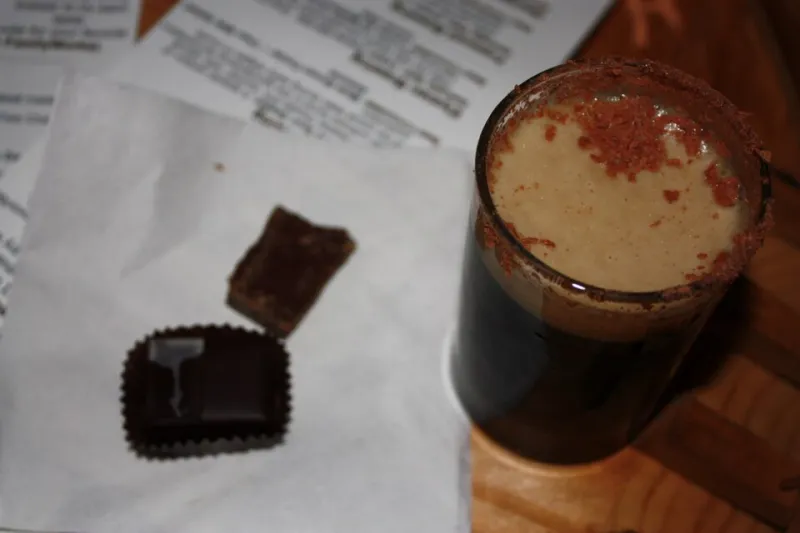
Write while the beer is in front of you, not after. Note the first smell and the first sip separately. Write down whether the beer got better as it warmed. If you pair it with food, keep the food simple: a piece of dark chocolate, aged cheese, roasted nuts, or bread. The goal is not to score every beer on a 100-point scale. The goal is to notice what you notice.
Make the ritual easy to keep
Pick a time and stick to it. After dinner, before bed, while the kitchen cools down. Pour a small glass, put the phone in another room, and give the beer five minutes of actual attention. If you miss a night, do not quit the calendar. Double up on the weekend or slide the sequence forward. The calendar is a tool for attention, not a test of discipline.
The darkest weeks of the year can feel like a countdown to nothing but cold. A dark-beer calendar gives them a shape. It is a small-batch ritual, built one bottle at a time, ending with the longest night and the promise that the light comes back.